
The curatorial and exhibition proposal of Xaltilolli: arts, memories, resistances
DOI:
https://doi.org/10.54104/nodo.v21n41.2476Keywords:
Museología crítica, patrimonio social, artes de los pueblos originarios, artes de comunidades, Xaltilolli.Abstract
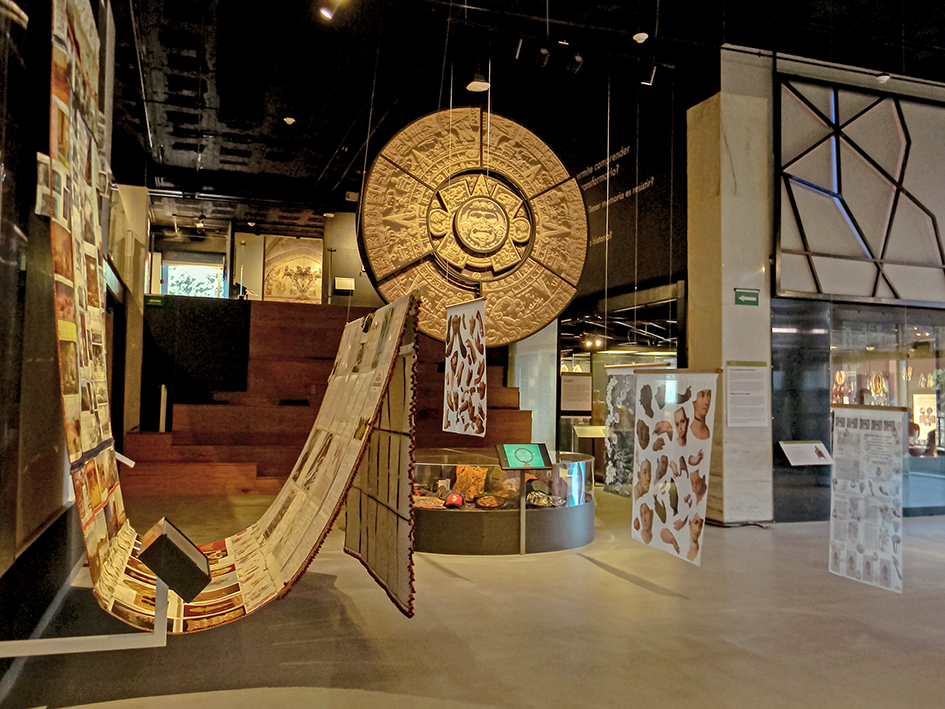
This article presents the development and initial findings of a curatorial project focused on artistic, cultural, and social expressions as processes of resistance, negotiation, memory, and identity among various indigenous communities in Mexico and Latin America. We take Tlatelolco as our case study and framework for reflection, as it is the site where Xaltilolli is located as part of a university cultural center (CCUT) that engages deeply with these themes. Starting with the question, “How can a curatorial proposal based on critical and social museology rethink narratives about heritage, memory, the arts, and the resistance of Indigenous peoples, using the case of Tlatelolco as a starting point?”. These pages will present the importance of highlighting diverse lines of continuity from the Indigenous past, with changes that respond to historical events but remain rooted in arts, culture, language, worldviews, and the multiple traditions that define social heritage in the 21st century. As a project of the National Autonomous University of Mexico (UNAM), this is a critical proposal toward the official and hegemonic discourses of the arts and history of the American continent; for this very reason, it has, from its inception, combined the perspectives of critical museology, social museology, and the importance of the collaborative and critical construction of narratives and interpretations. This is a recount on our curatorial experience with this project.
Downloads
References
Aguilar Gil, Y. E. (2025). Yásnaya Aguilar Gil y la desnaturalización de la categoría indígena. Liminar. Estudios Sociales y Humanísticos, 23(2).
Bonfil Batalla, G. (1972). El concepto de indio en América: Una categoría de la situación colonial. Anales de Antropología, 9. https://doi.org/10.22201/iia.24486221e.1972.0.23077
Casas, A. y Flores Farfán, L. (2018). Entre memoria y olvido: el 2 de octubre de 1968, Revista Mexicana de Ciencias Políticas y Sociales, 63(234), pp. 201-214. https://doi.org/10.22201/fcpys.2448492xe.2018.234.65717
Chagas, M., y Gouveia, I. (2014). Museologia social: reflexões e práticas (à guisa de apresentação). Cadernos do CEOM, 27(41), pp. 9-22. https://abpanet.org/repositorio dereferencias/museologia-social-reflexoes-e-praticas- a-guisa-de-apresentacao-3/?utm_source=chatgpt.com
Díaz-Polanco, H. (1997). La rebelión zapatista y la autonomía. México: Siglo XXI Editores.
García Canclini, N. (1999). Los usos sociales del patrimonio cultural. En E. Aguilar Criado (coord.), Patrimonio etnológico: nuevas perspectivas de estudio (pp. 16-33). Junta de Andalucía.
Ham, S. H. (2013). Interpretation: Making a difference on purpose. Fulcrum Publishing.
Lorente, J. P. (2006). Nuevas tendencias en la teoría museológica: a vueltas con la museología crítica. Museos.es: Revista de la Subdirección General de Museos Estatales, (2), pp. 24-33. https://www.cultura.gob.es/dam/jcr:f7e98180-b951-45ab-bae3-4af66471ba78/rev02-jesus-pedro- lorente.pdf
Lorente, J. P. (2015). Estrategias museográficas actuales relacionadas con la museología crítica. Complutum, 26 (2), pp. 111-120. https://doi.org/10.5209/rev_CMPL.2015.v26.n2.50422
Moutinho, M. C. (1993). Sobre o conceito de museologia social. Cadernos de Sociomuseologia, 1(1), pp. 5-7. https:// revistas.ulusofona.pt/index.php/cadernosociomuseologia/article/view/467
Narro Robles, J., Arroyo, S. R., De la Garza, M., León-Portilla, M., Ortiz Monasterio, F., Stavenhagen, R., Stavenhagen, E., y Bodek, C. (2011). Vivir entonces: creaciones del México antiguo. Colección Stavenhagen. Universidad Nacional Autónoma de México, Centro Cultural Universitario Tlatelolco.
Navajas Corral, Ó. (2020). Nueva museología y museología social. Una historia narrada desde la experiencia española. TREA.
Navajas Corral, Ó., y Fernández Fernández, J. (2016). El profesional de la museología social: competencias, habilidades y futuro para su implicación en el desarrollo territorial. erph_ Revista Electrónica de Patrimonio Histórico, 19, pp. 152-176. https://doi.org/10.30827/erph.19.2016.5503
Poniatowska, E. (1971). La noche de Tlatelolco: testimonios de historia oral. México: Ediciones Era.
Sánchez de Bustamante, L., y Balderrama Macías, J. L. (coords.) (2024). Xaltilolli ce | ome. Universidad Nacional Autónoma de México, Centro Cultural Universitario Tlatelolco.
Stavenhagen, R. (1965). Siete tesis equivocadas sobre América Latina. México: El Colegio de México.
Tolentino, A. B. (2016). Museologia social: apontamentos históricos e conceituais. Cadernos de Sociomuseologia, 52 (8). https://doi.org/10.36572/csm.2016.vol.52.02
Uriarte Castañeda, M. T., Guilliem Arroyo, S., Favila Vázquez, M., y Sánchez de Bustamante, L. (eds.). (2012). Museo de Sitio de Tlatelolco. México: Instituto Nacional de Antropología e Historia, Universidad Nacional Autónoma de México.
Ventura Patiño, M. del C. (2012). Proceso de autonomía en Cherán. Movilizar el derecho, Espiral, 19(55), pp. 157-176.
Downloads
Published
Metrics
-
Abstract 0
-
PDF 0
Issue
Section
License
Copyright (c) 2026 María Isabel Álvarez Icaza Longoria, Lucía Sánchez de Bustamante

This work is licensed under a Creative Commons Attribution-NonCommercial-ShareAlike 4.0 International License.
How to Cite
AI Declaration


 Portal de Ciencia Abierta
