
The lesbian body as an enunciative position in the visual arts. A critical- creative essay from artistic practice and the autobiographical archive
DOI:
https://doi.org/10.54104/nodo.v20n40.2387Keywords:
autobiographical archive, visual arts, situated practice, lesbian identity, feminist art theoryAbstract
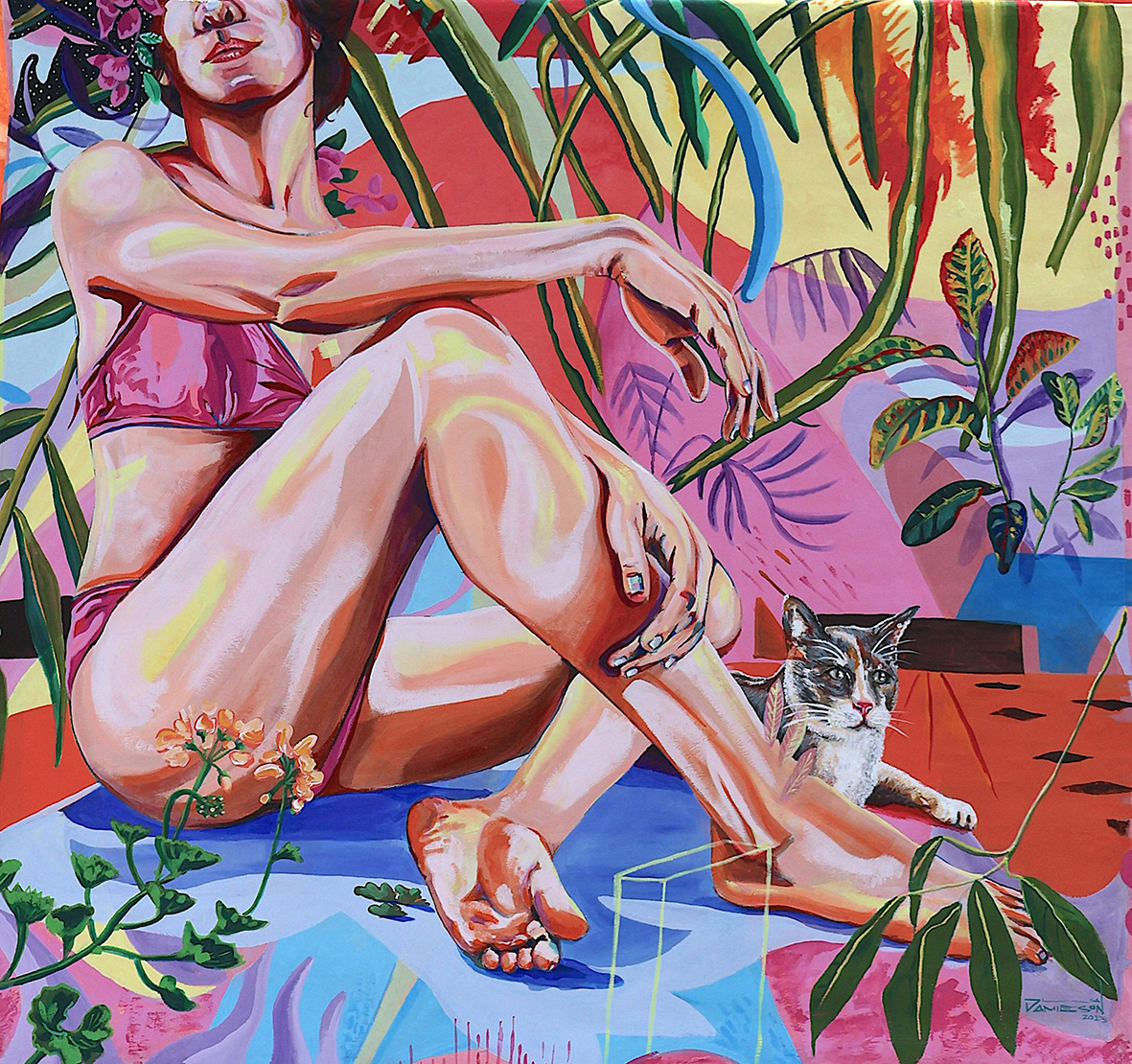
This critical-creative essay reflects on the lesbian body as an enunciative position in the visual arts through an intersection of historical analysis, feminist art theory, artistic practice, and the author’s autobiographical archive. In response to a visual imaginary of lesbianism historically constructed through the heterosexual male gaze, one that has reduced relationships between women to an erotic and fetishized spectacle for consumption, the text proposes the recovery of genealogies, lived experiences, and modes of representation that emerge from lesbian authorship and non-normative sexual dissidences.
The essay articulates two categories for thinking about lesbian art: on the one hand, works that explicitly represent erotic, affective, or intimate bonds between women; on the other, artistic productions across diverse artistic languages whose lesbian potency operates in subtle, symbolic, or political ways through the identity, life experience, and positionality of their authors. Through historical and contemporary examples from visual, performative, and audiovisual practices, the text sketches the construction of a counter-archive that makes visible bodies, desires, and affects traditionally marginalized from hegemonic art historical narratives.
Written from a situated perspective, the essay integrates personal experience and artistic practice as legitimate forms of knowledge production, understanding the autobiographical archive, memory, and time as spaces of resistance. In this way, lesbian being is affirmed not merely as an object of representation, but as an active position of enunciation, artistic creation, and the production of new visual cartographies.
Downloads
References
Avalle, C. (2020, 25 de mayo). Ensayos ópticos: El sueño, de Courbet. Revista Cultural Siete Artes. https://revistasieteartes.home.blog/2020/05/25/ensayos-opticos-el-sueno-de-courbet-por-carlos-avalle/
Bravo, A. (2014). Beso de cholas [performance]. Bolivia.
Butler, J. (2007). El género en disputa: el feminismo y la subversión de la identidad. Paidós.
Cervantes, C. (2021). Mujeres y diosas [poema]. Ciudad de México.
Escobedo, L. (s. f.). Obra escultórica, dibujo y video [serie]. Archivo de la artista.
Hueso, L. (2018-2020). Lenchas y marimachas [proyecto fotográfico]. México.
Mogrovejo, N. (2000). Un amor que se atrevió a decir su nombre. La lucha de las lesbianas y su relación con los movimientos de liberación homosexual y feminista en América Latina. Plaza y Valdés.
Nochlin, L. (1971). ¿Por qué no han existido grandes artistas mujeres? ARTnews.
Pollock, G. (2013). Visión y diferencia. Feminismo, feminidad e historias del arte. Editorial Casimiro.
Downloads
Published
-
Abstract90
-
PDF (Español)23
How to Cite
Issue
Section
License
Copyright (c) 2026 Lila Jamieson

This work is licensed under a Creative Commons Attribution-NonCommercial-ShareAlike 4.0 International License.

 Portal de Ciencia Abierta